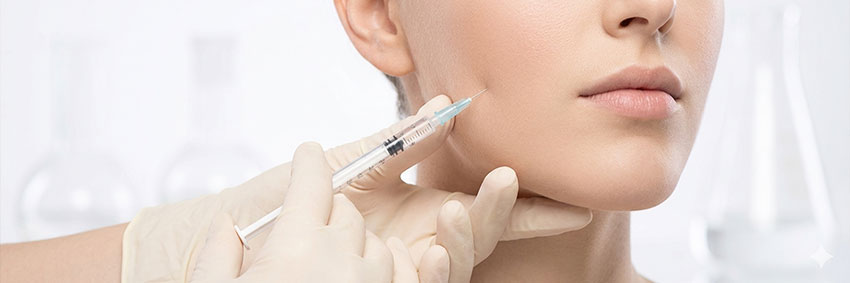
Bruxism affects around one in ten people. In cases that do not respond sufficiently to conventional treatments, botulinum toxin injections into the chewing muscles offer an effective and medically recognised treatment option.
On this page:
- What is bruxism?
- Causes and aggravating factors
- Treatment of bruxism with botulinum toxin
- Contraindications
—
Bruxism is an involuntary activity of the jaw muscles during sleep or during the day, often without conscious awareness. This muscular hyperactivity can cause premature tooth wear, muscle pain, facial tension and functional problems of the jaw joint.
In this context, botulinum toxin can be considered a therapeutic option because it partially blocks the transmission of nerve signals to the targeted muscles.
During the consultation, botulinum toxin is injected directly into the muscle to reduce contraction strength without suppressing normal jaw function.
You therefore keep your ability to chew, speak and move your jaw normally. Only the involuntary and excessive contractions characteristic of bruxism are reduced in this way.
What is bruxism?
Bruxism refers to the involuntary and repeated contraction of the jaw muscles, causing teeth grinding or jaw clenching. This condition can occur at night or during the day, often without the person being aware of it.
Jaw clenching or teeth grinding
Two clinical forms are distinguished:
- Static bruxism is characterised by continuous jaw clenching, without any visible movement. The muscles remain under prolonged tension, which causes pain and intense muscle fatigue, often felt on waking.
- Dynamic bruxism involves back-and-forth movements of the jaws, producing tooth friction and an audible grinding noise. This is the form most often reported by a patient’s partner and may be associated with sleep disturbances or even sleep apnoea.
In both cases, the teeth are exposed to abnormal pressure, significantly greater than the forces produced during normal chewing. Over time, the consequences for oral health and the temporomandibular joints can be significant.
Causes and aggravating factors of bruxism
Bruxism is most often linked to stress and anxiety. Night-time muscle contractions can be seen as a release of tension accumulated during the day.
Certain factors can aggravate the condition:
- Consumption of caffeine, alcohol or tobacco increases neuromuscular activity and encourages night-time contractions.
- Misaligned or missing teeth may force the jaw to compensate, increasing muscular tension.
Fragmented sleep phases are favourable moments for episodes of bruxism, which may in turn further disturb sleep quality and create a vicious circle.
Possible treatments for bruxism
Awareness of the condition is often triggered by muscle pain or by a partner who hears night-time teeth grinding. The diagnosis is then confirmed during a dental consultation, where the practitioner can observe characteristic wear or even damage to existing prostheses or implants.
In some cases, a specialised sleep consultation may help identify associated disorders, such as sleep apnoea or hypersomnia, and guide the overall management plan.
Conventional approaches
Because bruxism is largely psychosomatic in origin, it often benefits from multidisciplinary care.
- Psychological support and relaxation techniques. These methods address the underlying cause of the disorder and can produce lasting results in receptive patients.
- Custom-made occlusal splints. Made by the dentist, they create a barrier between the dental arches, limiting damage to the enamel and redistributing forces. They do not reduce muscle contractions, but they protect the teeth effectively.
It is also recommended to maintain a healthy lifestyle by limiting stimulants, improving sleep quality and engaging in regular physical activity.
When should treatment of bruxism with botulinum toxin be considered?
In pronounced cases of bruxism, where muscle strength is particularly high and conventional treatments are not sufficient, botulinum toxin injection into the chewing muscles is a leading complementary therapeutic option.
It is particularly indicated when the risk of dental fractures or damage to prostheses or implants is high, or when patients experience disabling chronic pain.
Treatment of bruxism with botulinum toxin
Botulinum toxin works by partially blocking the transmission of nerve signals to the targeted muscles. Injected directly into the masseter muscle, which is responsible for excessive contractions, it reduces contraction strength without suppressing normal jaw function.
Consultations
BeauCare Practices & Clinic
How a session takes place
A preliminary consultation is offered to assess the intensity of bruxism, review your medical history and define the most appropriate treatment protocol.
A botulinum toxin injection session lasts only a few minutes.
It is performed without anaesthesia, although mild discomfort may be felt at the time of injection. Small bruises may appear in the treated area and disappear naturally within a few days.
No recovery period is required. You can resume your activities immediately after the session, simply avoiding intense physical exercise for 24 hours.
Expected results and duration of the effects of botulinum toxin
The first effects are usually noticeable after a few days. A significant reduction or disappearance of night-time grinding and clenching, as well as a decrease in morning pain, are generally observed within 10 days after injection.
To maintain these benefits over time, maintenance injections are recommended on average every 6 months, depending on each patient’s progress.
Contraindications to treatment of bruxism with botulinum toxin injections
Treatment with botulinum toxin is contraindicated in the following situations:
- Known hypersensitivity to botulinum toxin or to one of its components.
- Recent use of aspirin or corticosteroids. These medicines increase the risk of bleeding or modify tissue response.
- In case of pregnancy and/or breastfeeding, treatment is systematically postponed.
- In case of active skin inflammation in the area to be treated, any injection is contraindicated until the inflammation has resolved.
Open communication with the practitioner during the initial consultation is essential to ensure that botulinum toxin is suitable for your situation.